

Let's Stop Straining for Shortcuts
On reading and the patience of sanctification


It’s no secret the proliferation of the internet and the smartphone have opened up a host of opportunities in education. Thanks to technology I can work on the dishes and listen to a seminary lecture through my RTS app or take an online watercolor class from my living room. Online educational courses and apps dangle the hope of the people we’d like to be. Want to learn photography? In twenty sessions you’ll be ready to get your first client! Interested in learning Spanish? You’ll be fluent in 10 minutes a day!
While these opportunities can be very helpful, they also can push us further towards the idea that life is more about quickly improving ourselves through metrics than through slowly forming our character. (Alan Noble writes often about this very thing so well referring to our obsession with technique).
These sales pitches won’t end because as long as customers are looking to better themselves—they’ll buy. I recently came across one such educational app called Nibble, which promises to buy back your wasted time scrolling and instead fill you with the wisdom of Literature, Philosophy, Biology, and various other topics. In just five minutes a day you can “become the smartest person in the room!” Imagine, learning about the emotional depth of Wuthering Heights in just six minutes and getting to think deeply on morality of Dorian Gray for a whole eight minutes.
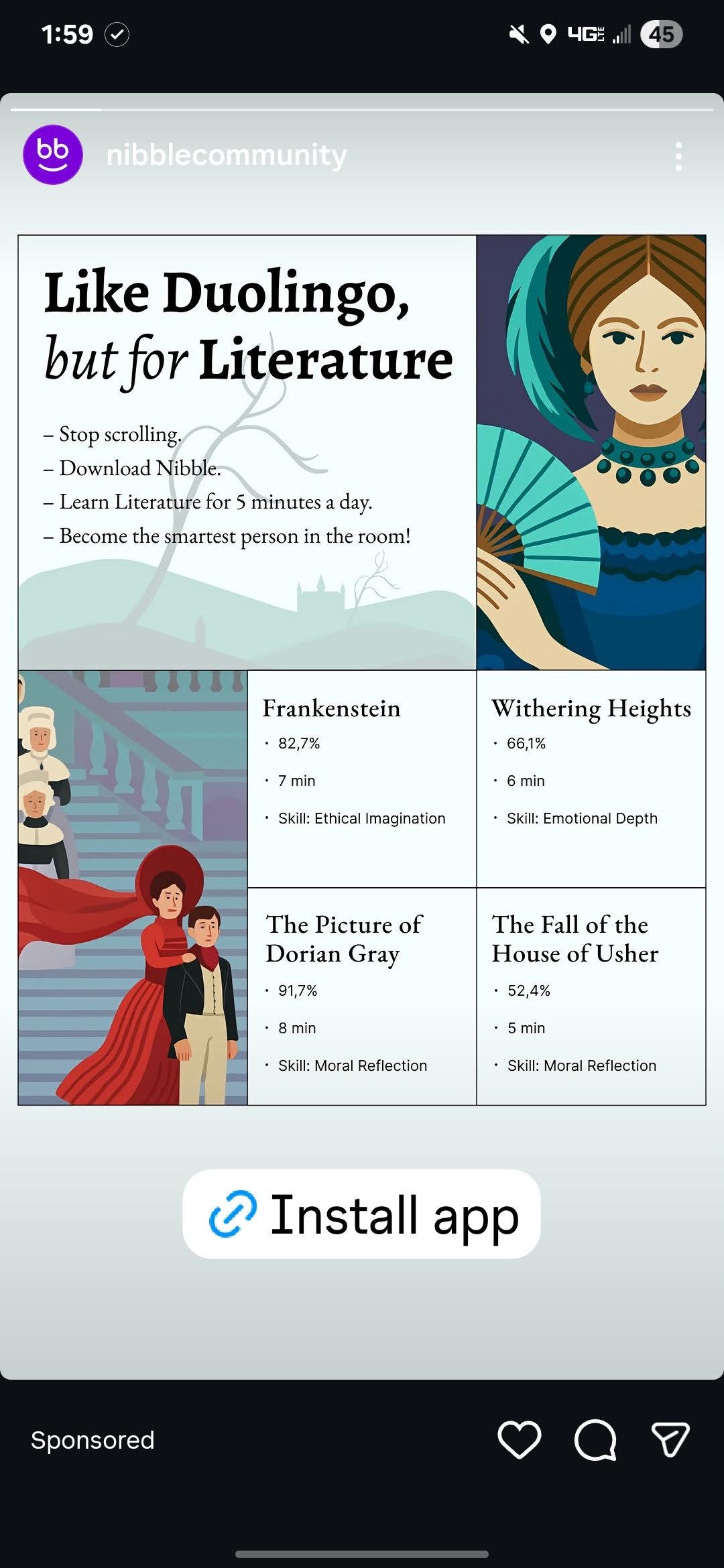
To be honest, this graphic would have appealed to me in my younger years. I used to want to be the smartest person in the room especially regarding literature. It’s why I cozied up with A Tale of Two Cities on the bus in middle school. It’s why I pushed my way through Great Expectations shortly after it. I made myself read those books and learn the plot because I wanted to be seen as intelligent. I labored only for the metrics, and in the process I missed out on the richness that was offered within the pages.
The good stuff of life—like literature, philosophy, theology, biology, history, and art—deserves far more attention than for the shallow goal of “becoming the smartest person in the room.” Let’s just take a look at one of my favorite: literature. Stories have the power to change us and to teach us, but this change isn’t the ability to recite a three-sentence literary summary. It isn’t bound up in knowing a certain plot line or analysis. Instead the formation of our character and the development of wisdom happens as we absorb the story.
One way stories do this is by inviting us to feel along with the characters. We don’t only know on an intellectual level that the enslaved men and women during the Civil War faced difficulty, but we open up Jubilee and get to sit with Vyry as she weeps over the destruction of a fire, and we feel the sorrows compound for all the pages we’ve walked with her through her difficult life. Silas Marner doesn’t just tell us about a man who was betrayed, but it beckons us into his loneliness and grief so that the ending pierces our hearts in a way the cliffnotes version never could. Everyone knows the lavish plot line of The Great Gatsby, but the one who opens the book must sit uncomfortably in the path of careless people like Daisy and Tom.
The slow journey within these worlds pricks our hearts and moves them toward change—to be like the characters or to be exactly the opposite. We need that time, for we are a stubborn people who are prone to hear but not listen, to see- but not understand. Sitting next to a character through the long road will do far more for us than any ten-minute spiel we can repeat, for in the former- the story has cut to our heart, not only to our heads.
It shouldn’t be much of a surprise that this is how we learn through literature, for it’s how our Lord works out our own sanctification—not with five minute power sessions, but throughout the long and patient act of life—of sermon after sermon, of another day of failing and repenting, of sorrowing and rejoicing, of carelessness and forgiveness, of work and play. Slowly and faithfully we travel the inefficient, time-consuming pages of life, and we are changed inwardly by his Spirit.
Yes we’d love to rush ahead immediately towards all the peace, patience, and wisdom, but here in the middle is the good stuff—the better stuff. For there is Jesus, holding our hand and doing his mighty work not only in our heads, but in our hearts.
Perhaps instead of shortcuts, we could set our feet firmly on the winding path—whether that be with the pages of a novel, in a painting, or in our faithful walk with our Savior.
It will always be worth it.
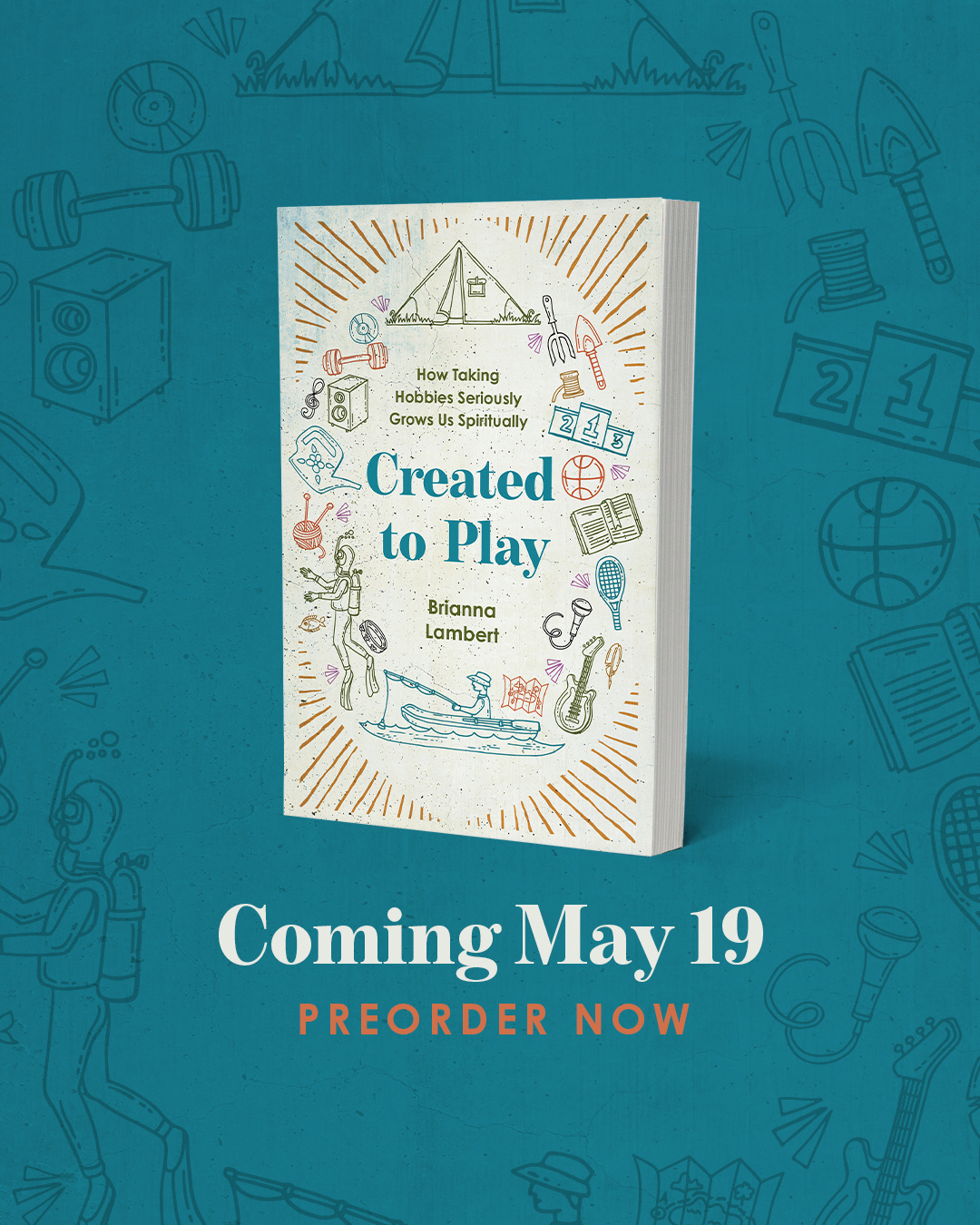
I love talking about the way the Lord shows his goodness and beauty amidst the every day. If you do too, check out my upcoming book, Created to Play: How Taking Hobbies Seriously Grows Us Spiritually.
Excellent point about Silas Marner needing that slow immersion. The lonliness he experiences after being betrayed by William Dane builds over so many chapters that by the time Eppie shows up, the redemption feels earned in a way a summary could never capture. I tried one of those book summary apps last year thinking it would help me "stay current" and honestly it just made me realize how much texture gets lost when we optimize for effeciency. The sanctification parallel is spot on too.
Wow. So true. This topic is worthy of our further consideration & possible discussion, which is too long to post here, haha. But thank you again Brianna for thought-provoking prose ☺️❤️